แทงบอลออนไลน์
Forex Archives - victorybull

Category: Forex

  • In Early Trade He Rupee Fell To An All-Time Low 78.29 Versus The US Dollar

    In Early Trade He Rupee Fell To An All-Time Low 78.29 Versus The US Dollar

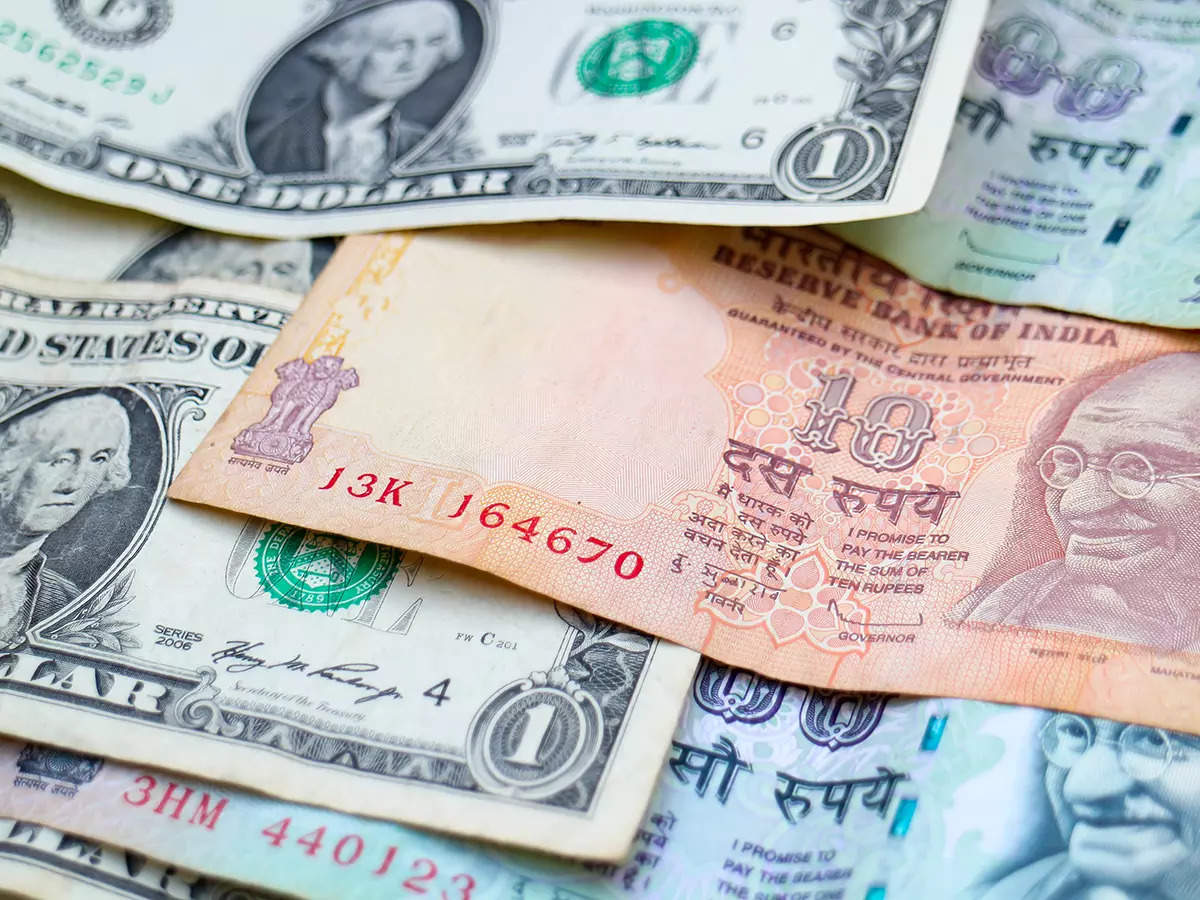
    In early trade on Monday, the rupee fell 36 paise to an all-time low of 78.29 versus the US dollar, reflecting the strength of the US currency outside as investors rushed to the safe-haven currency amid an overall risk-averse mood Investor morale was pulled down by weak Asian currencies, a trend in local stocks, and continued foreign capital outflows, according to forex dealers The rupee began at 78.20 versus the US dollar on before losing momentum to quote at 78.29, a new low, down 36 paise from the previous closing The rupee fell 19 paise to a new lifetime low of 77.93 versus the US dollar on Friday.



    Weak global sentiments, as well as weak Asian and European currencies, have caused the rupee to start below 78, despite the RBI’s efforts to keep it below 77.70.

    We’ll have to keep an eye on the RBI in the coming days to see how it acts Head of Treasury, Anil Kumar Bhansali, stated Brent crude futures declined 1.46 percent to USD 120.23 a barrel, the global benchmark In the meantime, the dollar index, which measures the strength of the greenback against a basket of six currencies, was up 0.30 percent at 104.45.
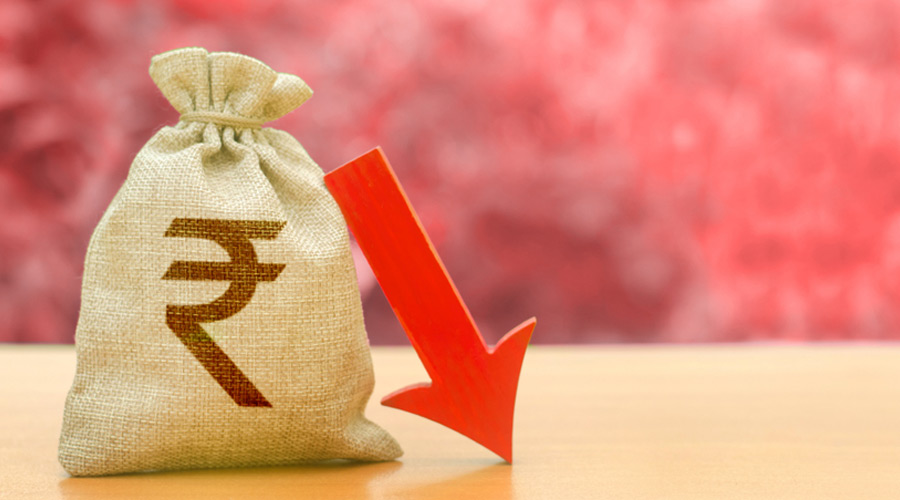

  • The rupee falls to an all-time low of 77.74 per dollar

    The rupee falls to an all-time low of 77.74 per dollar

    The rupee fell to a new all-time low against the US dollar on Wednesday, ending at 77.74, slightly lower than its previous close of Despite continued foreign capital outflows and higher global crude oil prices, the local currency traded in a limited range The previous low was set on May 19, when it closed at 77.73 against the dollar, but it had hit 77.80 levels during intraday trade on May 17 USD-INR volatility may continue to be minimal. Anindya Banerjee, the vice-president, of currency options & interest rate derivatives, Kotak Securities, stated, “A range of 77.40 to 78.00 remains in play in the short term.


    Bond prices climbed following the Reserve Bank of India’s monetary policy committraiseding the policy repo rate by 50 basis points bps in line with market expectations.

    and keeping the status quo on banks cash reserve requirements. The three-year government bond rate fell 9 basis points, while the five-year bond yield fell 7 basis points. The four-year paper’s yield fell 8 basis points According to statistics from the the yield on 10-year government bonds (6.54 percent 2032) was 7.51 percent at the start and 7.49 percent at the close Given the high level of inflation, the market has priced in the magnitude of the repo rate rise. Bond rates are projected to fluctuate in a range for the time being, according to dealers and experts The RBI governor has previously stated that a rate hike was a ‘no brainer,’ according to Madan Sabnavis, chief economist of Bank of Baroda. “As a result, the 10-year yield was largely constant between 7.47 and 7.5 percent under the present regime.” In the short run, the yield on 10-year paper is projected to remain range-bound,” he added. As the RBI works toward a more controlled drawdown of liquidity, the yield might rise to 7.75-8%, he noted.

  • On Tuesday, the dollar struggled to find buyers as the market mood improved

    On Tuesday, the dollar struggled to find buyers as the market mood improved

    allowing the currency to remain reasonably resilient against its peers. Eurostat will publish the euro area’s first-quarter Gross Domestic Product (GDP) numbers. Later in the day, a 10-year US Treasury note auction will take place, and the US Census Bureau will release statistics on Wholesale Inventories. The trade action might continue muted ahead of the European Central Bank’s (ECB) policy announcements on Thursday and the US inflation data on Friday Despite the lack of high-impact data announcements, Wall Street’s major indexes rose sharply on Tuesday. US stock index futures, on the other hand, are down between 0.3 and 0.4 percent so far on Wednesday, indicating a cautious market sentiment. The US Dollar Index, which measures the value of the dollar against a basket of six major currencies, is up slightly at 102.50.


    The raised its key repo rate by 50 basis points to 4.9 percent on Wednesday, while keeping the reserve repo rate at 3.35 percent constant.

    After initially soaring to 77.95, the USD/INR has recovered to 77.70 China’s Vice Commerce Minister stated in a statement a day before the release of the country’s trade balance figures that importers and exporters are still under pressure owing to logistical issues and rising material prices. On Tuesday, the EUR/USD fell to a five-day low of 1.0652 before recovering its losses. In the European session, the pair is trading just below 1.0700.


    After dipping to a multi-week low below 1.2500 on Tuesday, the GBP/USD closed the day in positive territory, aided by risk flows. The pair has been maintaining its gains below 1.2600 at the time of writing.

    Above 133.00, the USD/JPY is at its highest level in 20 years. Japan’s GDP dropped by 0.5 percent on an annualised basis in the first quarter, according to official figures. On Wednesday, Bank of Japan Governor Haruhiko Kuroda stated that his comment on families’ acceptance of price rises had been withdrawn. “Rapid currency weakness in a short period of time, as observed recently, is undesirable,” Kuroda continued, although his words did not help the yen find buyers On Tuesday, gold took advantage of falling US T-bond rates to end a two-day losing skid. In the European session, XAU/USD appears to have stabilised at Bitcoin is continuing to fall after suffering minor daily losses on Tuesday, and was last noted around $30,500, down 2% on the day. Ethereum remains on the back foot, trading within a hair’s breadth of $1,800.

  • Dollar continues 20-year high vs yen amid inflation fears; Aussie falls

    Dollar continues 20-year high vs yen amid inflation fears; Aussie falls

    The dollar extended its overnight run into Asian trading hours on Tuesday, reaching new two-decade highs against the yen as concerns over continuing inflation drove up US bond rates The dollar gained ground against the euro, pound, and Swiss franc. It also rose against the Australian dollar, with the market divided on whether the country’s central bank will raise Australia’s key interest rate by a quarter-point later in the day or opt for something bigger The Australian dollar fell 0.15 percent to $0.7183, continuing its decline from a six-week high of $0.72825 reached last Frida.


    The dollar rose to 132.305 yen on Tuesday, a level not seen since April 2002, boosted by a surge in the 10-year Treasury yield above 3.05 percent for the first time in almost four weeks. The currency pair was last trading at 132.12, up 0.17 percent.

    In contrast, the curve management strategy has kept corresponding Japanese rates close to zero, with central bank governor Haruhiko Kuroda maintaining an unflinching commitment to “strong” monetary stimulus on Monday The Commonwealth Bank of Australia attributes the yen’s weakness to not just yield differentials but also Japan’s reliance on energy imports, though it does not predict much further weakening Strong US job statistics at the end of last week fueled speculations that price pressures will persist for a longer period, perhaps prompting the Federal Reserve to take more aggressive action Consumer pricing data on Friday will give more insight into the Fed’s rate-hiking strategy ahead of next week’s policy meeting when a half-point hike is generally predicted. The dollar index, which compares the currency to six major peers, rose 0.04 percent to 102.51, extending Monday’s 0.26 percent raise The euro fell 0.9% to $1.0686 ahead of the European Central Bank‘s rate-setting meeting on Thursday, with traders demanding more clarity on what comes next, having already priced in many rises and the end of bond-buying stimulus Sterling fell 0.04 percent to $1.2523. It gained 0.29 percent in the previous session as Prime Minister Boris Johnson survived a no-confidence vote but was left vulnerable. The US dollar increased by 0.11 percent to 0.97125 Swiss francs

  • In Early Trade, The Rupee Is Trading Flat Against The US Dollar

    In Early Trade, The Rupee Is Trading Flat Against The US Dollar

    On Tuesday, the rupee opened flat versus the US dollar, owing to a lackluster trend in domestic equity markets and continued foreign capital outflows The rupee opened sluggish versus the dollar at 77.56 on the interbank foreign exchange, before becoming volatile and trading in a narrow range of 77.56 to 77.51. The native currency was trading at 77.56 against the US dollar, down barely 1 paisa from the previous close The rupee had finished at 77.55 versus the dollar in the previous session. The dollar index, which measures the strength of the greenback against a basket of six currencies, was up 0.19 percent at 102.27.


    The was down 59.07 points, or 0.11 percent, at 54,229.54 points, while the broader NSE Nifty was down 28.15 points, or 0.17 percent, at 16,186.55 points in the domestic equity market. Brent crude futures fell 0.61 percent to USD 112.73 a barrel, the global benchmark According to stock exchange data, foreign institutional investors were net sellers in the capital market on Monday, offloading shares worth Rs 1,951.17 crore RBI Governor Shaktikanta Das intimated on Monday that another interest rate hike in early June would be necessary to bring the stubbornly high inflation rate down. The next meeting of the Monetary Policy Committee (MPC) is scheduled for June 6-8.

  • The Dollar Takes A Break As US Yields Drop Ahead Of CPI

    The Dollar Takes A Break As US Yields Drop Ahead Of CPI

    The US dollar’s rally came to a halt as the DXY index dropped to 103.5 before the release of April’s US Consumer Price Index (CPI) numbers, while Treasury yields fell as investors switched away from a turbulent stock market amid fears about global growth and a potential inflation peak The Japanese yen (JPY) and Swiss franc (CHF), the top laggards in the previous quarter, gained ground against the USD as the US 10-year yield fell below 3% in European morning trading.
    Investors want to know if the US has achieved its inflation high, which might trigger the dollar and other significant currencies to react aggressively. The US CPI is expected to drop to 8.1 percent in April from a 41-year high of 8.5 percent in March, marking the first drop in annual inflation in seven months.


    However, rising energy costs on the one hand, and pressure on services pricing as a result of a reasonably strong US employment market on the other, might potentially lead to positive April inflation surprises Meanwhile, risk appetite is increasing today, with the Australian currency (AUD) and the New Zealand dollar (NZD) among the best performers, after Shanghai reported a 51% drop in new daily Covid-19 infections, while Beijing reported fewer instances as well After the head of the Bundesbank suggested that a rate hike could come in July and that waiting to change monetary policy is a risky strategy, the euro
    The Norwegian krone (NOK) increased by over 1% on the day, while the Canadian dollar (CAD) increased by 0.4 percentThe high-beta Swedish krona (SEK) was also one of the best performers today, rising roughly 1% against the dollar.

  • India’s Foreign Exchange Reserves Have Plummeted By $1.7 Billion, Reaching A one-Year Low

    India’s Foreign Exchange Reserves Have Plummeted By $1.7 Billion, Reaching A one-Year Low

    According to Reserve Bank of India (RBI) data released on Friday, India’s forex reserves fell by USD 1.774 billion to USD 595.954 billion for the week ended May 6 due to a drop in core currency assets Overall reserves fell by USD 2.695 billion to USD 597.728 billion in the preceding reporting week, dropping below the USD 600 billion level RBI is apparently intervening across all markets to defend the rupee, which is under pressure due to large outflows by foreign investors. In the six months leading up to March 2022, foreign exchange reserves fell by USD 28.05 billion.


    According to RBI’s weekly data, the loss in reserves was due to a drop in Foreign Currency Assets (FCA), a major component of overall reserves, and gold reserves during the reporting week.

    In the week ending May 6, FCA fell by USD 1.968 billion to USD 530.855 billion The effect of appreciation or depreciation of non-US units held in foreign exchange reserves, such as the euro, pound, and yen, is included in the foreign currency assets when expressed in dollar terms The data showed that gold reserves climbed by USD 135 million to USD 41.739 billion in the reporting week. The International Monetary Fund’s (IMF) Special Drawing Rights (SDRs) increased by USD 70 million to USD 18.370 billion According to the data, the country’s reserve position with the IMF fell by USD 11 million to USD 4.99 billion in the reporting week.

  • As investors seek safe haven assets, the rupee hits a new all-time low

    As investors seek safe haven assets, the rupee hits a new all-time low

    The rupee struck a new all-time low versus the dollar in early trade on Tuesday, trading at 77.78/$, as the dollar strengthened against other foreign currencies, prompting investors to seek safe haven assets This is the second trading session in a row that the Indian currency has dropped to new lows. The rupee.


    touched an intraday low of 77.63/$ on Friday, the preceding trading day The Reserve Bank of India increased its currency market intervention, slowing the rate of decline. Following Russia’s invasion of Ukraine, the Indian currency, which has devalued by roughly 4% in 2022, came under pressure. Since the battle began in late February of this year, the foreign reserves have dropped by roughly $35 billion.

  • Today’s gold price is Rs 51,490 per 10 gramme, with silver at Rs 60,800 per kilogramme

    International gold prices

    On Friday, the price of 10 grammes of 24 carat gold increased by Rs 490 to Rs 51,490, while the price of 1 kilogramme of silver increased by Rs 400 to Rs 60,800.

    On Friday, the price of 10 grammes of 22 carat gold increased by Rs 450, bringing the price to Rs 47,200. The price of 10 grammes of 24 carat gold in Delhi and Mumbai is Rs 51,490, which is the same as the price of 10 grammes of 24 carat gold in Bangalore, Kolkata, and Hyderabad.

    In Chennai, however, 10 grammes of 24 carat gold costs Rs 52,750.
    The price of 10 grammes of 22 carat gold in Delhi and Mumbai is Rs 47,200, which is the same as the price of 10 grammes of 22 carat gold in Bangalore, Kolkata, and Hyderabad.

    In Chennai, however, 10 grammes of 22 carat gold costs Rs 48,350. In Delhi, Mumbai, and Kolkata, a kilogramme of silver costs Rs 60,800, while the precious metal costs Rs 65,000 in Bangalore, Hyderabad, Chennai, and Kerala. The price of gold varies by region due to numerous factors such as making costs, excise duty, state taxes, and so on. The gold rates in India are influenced by a variety of factors, including international gold prices, local levies, and currency fluctuations.