Tag: Forex

  • US Dollar Clings To Gains As Bets On Further Fed Hikes Firm

    US Dollar Clings To Gains As Bets On Further Fed Hikes Firm

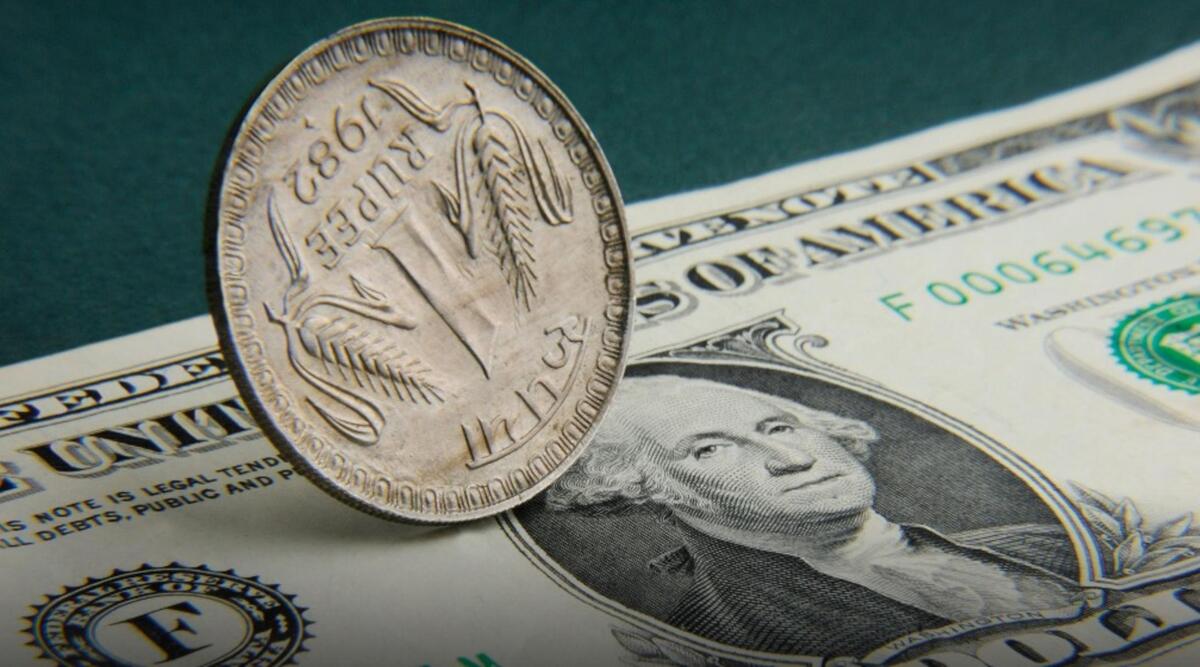
    THE Dollar Fought For A Footing In Choppy Trade On Thursday, With Support From Upbeat U.S. Data And Hawkish Policymaker Comments, While The Prospect Of Higher Energy Prices Helped Exporters’ Currencies And Weighed On Those Of Importers. The Dollar Rose 1% On The Euro And 1.3% On Sterling Overnight And Was Trying To Hold Those Gains In Bumpy Early Trade In Asia. The Euro Has Now Made Two UnsuccessfulAattempts To Regain Parity This Week And Last Bought $0.9916. Sterling’s Rebound From Record Lows Has Paused Just Below.



    The U.S. services industry posted another month of expansion in September, data showed overnight, while labour market figures were solid and the trade deficit narrowed. San Francisco Fed President Mary Daly reiterated policymakers’ focus on inflation fighting and dismissed market hopes for rate cuts in 2023. I think that just reminded people that you might be a bit premature in trying to price in rate cuts in the U.S.,” said Westpac currency strategist That pushed up rates and pushed up the U.S. dollar,” he said, as the Federal Reserve’s aggressive moves to rein in inflation sets the pace for central banks around the globe.

    Its One Trade For The Whole World, Said No One Currency’s Interest Rates Are Really Able To GO Off And Do Their Own Thing Independently.

    Bond markets globally sold sharply. Interest rate futures imply more than 130 basis points of tightening ahead for the Fed before the middle of next year The U.S. dollar index wobbled 0.06% lower to 110.86, off lows near 110 from earlier in the week, though some distance below last week’s 20-year high of Sterling last bought $1.1367, while the Australian and New Zealand dollars each rose about 0.4%, taking the Aussie to $0.6518 and the kiwi to.


    The yen, which has been held steady by the risk of further Japanese intervention, sat at 144.57 per dollar.

    The Saudi Arabia-led cartel of oil producers agreed to steep production cuts on Wednesday, lifting Brent crude futures to a three-week high of $93.99 a barre Higher energy prices would have a much more direct impact on the European region given the more direct relationship to their finances,” said NatWest Markets’ strategist Jan Nevruzi Later on Thursday the European Central Bank releases minutes from last month’s policy meeting. Traders are also awaiting Friday’s U.S. labour market data to gauge how fast and far the Fed might be willing to lift interest rates.


  • Oil Heads For Fourth Straight Monthly Loss as OPEC Meeting Looms

    Oil Heads For Fourth Straight Monthly Loss as OPEC Meeting Looms

    Oil prices rose slightly on Friday, but were set for a fourth straight month of losses amid growing concerns over weakening demand, with the focus now turning to a potential supply cut by the OPEC next week London-traded Brent oil futures, the global benchmark,  were flat at $87.50 a barrel by 21:55 ET (01:55 GMT), while U.S West Texas Intermediate curse futures rose 0.4% to $81.56 a barrel. Both contracts were set to lose about 9% in September Prices took mixed signals from Chinese manufacturing data on Friday. While the Official Government Reading showed that activity expanded in September, a Private survey showed that activity sank far more than expected Oil prices tumbled from annual highs this year amid growing concerns that rising interest rates will crimp economic activity, weighing on crude demand. Several major central banks, led by the Federal Reserve, have adopted an extremely hawkish stance this year.


    The Fed’s rate hikes boosted the dollar, which dented crude demand by making imports more expensive. The U.S. government has also drawn steadily from its Strategic Petroleum Reserve this year, increasing supply.

    Fears of an economic meltdown in the UK, as the pound crashed to record lows, rattled crude markets. A swathe of weak economic readings from China, the U.S. and the Eurozone this month also battered crude prices with the prospect of more demand destruction.


    But the consistent crude losses have spurred speculation that the Organization of Petroleum Exporting Countries will trim production when it Meet Next Week . Several members of the group have flagged potential measures to support prices Oil prices were set to end the week higher on that notion. WTI futures were up 3.4% this week, while Brent was set to add over 1%, with both contracts also breaking a four-week losing streak Weakness in the dollar, as investors locked in profits at 20-year highs, also benefited crude prices, as did data showing an unexpected decline in U.S. crude stockpiles Oil prices could potentially benefit from more tightening supply in the fourth quarter, particularly in light of an escalation in the Russia-Ukraine conflict. A harsher-than-expected European winter could also tighten supply by pushing up the use.

  • In early trade, the rupee rises 2 paise to 78.02 versus the US dollar

    In early trade, the rupee rises 2 paise to 78.02 versus the US dollar

    In early trade on Tuesday, the rupee bounced back from an all-time low against the US dollar, rising 2 paise to 78.02. The rupee began at 78.02 versus the dollar on the interbank foreign exchange, up 2 paise from its previous close In early trade, the native currency soared to 77.90 versus the US dollar, but it couldn’t hold on to its gains and fell to 78.06 The rupee fell 11 paise versus the US dollar on Monday, closing at a new career low of 78.04.


    According to Sriram Iyer, Senior Research Analyst at Reliance Securities, the Indian rupee began flat versus the dollar on Tuesday, as gains from easing domestic inflation concerns offset the greenback’s overnight surge.

    Retail inflation fell to 7.04 percent in May, owing to lower food and gasoline costs, as the government and the RBI intervened with duty reductions and repo rate hikes to rein in spiralling prices.

    However, for the sixth month in a row, inflation remained over the Reserve Bank’s upper tolerance range of 6%. This might lead the central bank to raise the repo rate again at its August policy meeting. Meanwhile, remained high on Tuesday morning, limiting the upward potentia Although Asian and developing market peers have opened mixed, rising inflation estimates might keep the currencies’ tendency down, according to Iyer Fears of a global economic downturn and expectations of an aggressive rate rise path from the US Fed boosted the dollar index, which measures the greenback’s strength against a basket of six currencies, by 0.01 percent to 105.08.


    Brent crude futures dipped 0.02 percent to USD 122.25 a barrel, the global benchmark. On the domestic front, the BSE Sensex was down 145.13 points, or 0.27 percent, at 52,701.57, while the wider NSE Nifty was down 85.30 points, or 0.54 percent, at 15,689.10 According to exchange statistics, foreign institutional investors were net sellers in the capital market on Monday, offloading shares worth Rs 4,164.01 crore.

  • The rupee begins the day with a gain against the US Dollar

    The rupee begins the day with a gain against the US Dollar

    In early trade on Thursday, the rupee was trading higher versus the US dollar. However, due to a stronger dollar in outside markets, the immediate gain was limited On the interbank forex market on Thursday, the rupee rose 3 paise to 77.52 against thedollar Meanwhile, in early morning activity on Thursday, stock markets opened in the green. The Sensex rose 0.35 percent, or 190.36 points, to 53,939.62 points, while up 0.21 percent, or 33.90 points, to 16,059.70 points.


    In limited activity on Wednesday, the rupee rebounded 2 paise to close at 77.55 against the US dollar The US dollar recovered from two days of losses ahead of the release of the US Federal Reserve’s meeting minutes later this month. Against a basket of six major currencies, the US dollar index rose 0.4 percent to 102.25 The rupee opened higher versus the dollar in the interbank forex market, at 77.54, and traded in a range of 77.44 to 77.57 in the day session. The rupee finally closed at 77.55 against the dollar, up 2 paise from its previous finish of 77.57.

  • The Rupee Rose 5 Paise To 77.52 Against The Dollar, As Local Equities Continued To Rise

    The Rupee Rose 5 Paise To 77.52 Against The Dollar, As Local Equities Continued To Rise

    In early trade on Wednesday, the rupee rose 5 paise to 77.52 against the US dollar, as a robust trend in local equities improved investor spirits However, forex traders claimed that rising and continuing foreign capital outflows restricted the local currency’s appreciation bias The rupee opened at 77.54 against the dollar on the interbank foreign exchange, then climbed to 77.52, up 5 paise from the previous close. Early on, it was trading in a tight range of 77.54 to 77.51 The rupee had previously finished at 77.57 per dollar in the previous session. The dollar index, which measures the strength of the greenback against a basket of six currencies, was up 0.06 percent at 101.92.


    On the domestic equities market, the 30-share Sensex was up 242.62 points, or 0.45%, at 54,295.23, while the broader NSE Nifty was up 68.85 points, or 0.43 percent, at 16,194 points. Brent crude futures rose 1.20 percent to USD 114.92 a barrel, a new high According to stock exchange data, foreign institutional investors were net sellers in the capital market on Tuesday, offloading shares worth Rs 2,393.45 crore.

  • In Early Trade, The Rupee Is Trading Flat Against The US Dollar

    In Early Trade, The Rupee Is Trading Flat Against The US Dollar

    On Tuesday, the rupee opened flat versus the US dollar, owing to a lackluster trend in domestic equity markets and continued foreign capital outflows The rupee opened sluggish versus the dollar at 77.56 on the interbank foreign exchange, before becoming volatile and trading in a narrow range of 77.56 to 77.51. The native currency was trading at 77.56 against the US dollar, down barely 1 paisa from the previous close The rupee had finished at 77.55 versus the dollar in the previous session. The dollar index, which measures the strength of the greenback against a basket of six currencies, was up 0.19 percent at 102.27.


    The was down 59.07 points, or 0.11 percent, at 54,229.54 points, while the broader NSE Nifty was down 28.15 points, or 0.17 percent, at 16,186.55 points in the domestic equity market. Brent crude futures fell 0.61 percent to USD 112.73 a barrel, the global benchmark According to stock exchange data, foreign institutional investors were net sellers in the capital market on Monday, offloading shares worth Rs 1,951.17 crore RBI Governor Shaktikanta Das intimated on Monday that another interest rate hike in early June would be necessary to bring the stubbornly high inflation rate down. The next meeting of the Monetary Policy Committee (MPC) is scheduled for June 6-8.

  • The Dollar Takes A Break As US Yields Drop Ahead Of CPI

    The Dollar Takes A Break As US Yields Drop Ahead Of CPI

    The US dollar’s rally came to a halt as the DXY index dropped to 103.5 before the release of April’s US Consumer Price Index (CPI) numbers, while Treasury yields fell as investors switched away from a turbulent stock market amid fears about global growth and a potential inflation peak The Japanese yen (JPY) and Swiss franc (CHF), the top laggards in the previous quarter, gained ground against the USD as the US 10-year yield fell below 3% in European morning trading.
    Investors want to know if the US has achieved its inflation high, which might trigger the dollar and other significant currencies to react aggressively. The US CPI is expected to drop to 8.1 percent in April from a 41-year high of 8.5 percent in March, marking the first drop in annual inflation in seven months.


    However, rising energy costs on the one hand, and pressure on services pricing as a result of a reasonably strong US employment market on the other, might potentially lead to positive April inflation surprises Meanwhile, risk appetite is increasing today, with the Australian currency (AUD) and the New Zealand dollar (NZD) among the best performers, after Shanghai reported a 51% drop in new daily Covid-19 infections, while Beijing reported fewer instances as well After the head of the Bundesbank suggested that a rate hike could come in July and that waiting to change monetary policy is a risky strategy, the euro
    The Norwegian krone (NOK) increased by over 1% on the day, while the Canadian dollar (CAD) increased by 0.4 percentThe high-beta Swedish krona (SEK) was also one of the best performers today, rising roughly 1% against the dollar.

  • Rupee falls to a new intraday low, but recovers when RBI intervenes

    Rupee falls

    The rupee struck a new intra-day low on Thursday, breaching the 77.5/$ barrier, as the US dollar strengthened, before the Reserve Bank of India (RBI) intervened to aid minimise its losses.The rupee finished the day at 77.43 per dollar, down 18 paise or 0.24 percent from its previous close of 77.24 per dollar.

    “As the dollar strengthened, the rupee dropped to a new all-time low today (Thursday).” However, losses were limited when the RBI intervened to reduce currency volatility. “The dollar surged after US inflation climbed in April,” said Gaurang Somaiya, Motilal Oswal Financial Services’ Forex and Bullion Analyst.

    On May 5, the rupee touched an all-time closing low of 77.47/$.Following the global uncertainty induced by the prolonged Russia-Ukraine conflict, investors pulled out of riskier assets, putting pressure on the rupee. So far in FY23, the currency has declined 2.1 percent versus the dollar, with a further 4% depreciation expected in 2022.

    To stem the rupee’s decline, the central bank has increased its intervention in the foreign exchange markets — spot, futures, and off-shore. As a result, since September 2021, the foreign exchange reserves have decreased by $45 billion.
    Total FX reserves have dropped below $600 billion, and the market anticipates reserves to drop further more before rising. For the week ending April 29, total foreign exchange reserves were $597.7 billion.

    The RBI stated its net forward assets were $65.79 billion at the end of March 2022, according to its half-yearly report on foreign exchange reserve management released on Thursday. According to the report on foreign reserve management, the RBI has boosted its gold reserves by over 100 metric tonnes in the last two years.

    The RBI owned 760.42 tonnes of gold at the end of March 2022, up from 653.01 tonnes at the same time in 2020 and 695.31 metric tonnes in 2021.

  • Rupee falls to a new low of 77.58 against the US dollar

    Indian rupee

    The Indian rupee fell to a new record low against the US dollar on Thursday, echoing losses across Asian rivals. The drop in global and local shares following the US inflation report pointed to more aggressive Fed tightening amid deteriorating investor confidence hit down by the global economic slowdown.

    The currency began trading at 77.56 per dollar and fell to a new low of 77.58 per dollar. The local currency was trading at 77.57 per dollar at 9.30 a.m., down 0.4 percent from its previous close.

    The South Korean won dropped 1.05 percent, the Taiwan dollar 0.5 percent, the Chinese Renminbi 0.41 percent, the Philippine Peso 0.25 percent, and the Malaysian ringgit and Thai Baht each declined 0.2 percent.

    Last month, the US consumer price index increased by 8.3% over the previous month. This was lower than the 8.5 percent increase in March, which was the largest since 1981. Following similar hikes in June and July, analysts now expect the Federal Reserve to raise rates by half a point in September.

    Investors were particularly concerned about the Russia-Ukraine conflict and China’s COVID restrictions.

    Traders are now waiting for India’s consumer price inflation and industrial production index data, which will be released after 5.30 p.m. today. According to Bloomberg, the CPI will be 7.42 percent in April, up from 6.95 percent the previous month. IIP will be 1.3 percent in March, down from 1.7 percent the previous month.

    In response to increased oil costs and slower global growth, Morgan Stanley has lowered India’s GDP growth predictions to 7.6% for FY2023 and 6.7 percent for FY2024.

    The dollar index, which gauges the strength of the US currency versus other major currencies, was at 104, up 0.1 percent from its previous closing of 103.85.

  • To protect the rupee, the RBI may be cautious about spending FX reserves

     Reserve Bank of India

    When the Federal Reserve tightens, the Reserve Bank of India tries to defend its currency once more.

    Analysts expect it to launch a more limited defense this time, geared at fighting off the worst of speculative attacks rather than drawing a line in the sand when global capital flows are shifting and the Fed is expected to increase throughout the year.

    To save ammunition amid a broad dollar surge spurred by expectations of aggressive monetary tightening by the Federal Reserve, the RBI may choose a limited intervention policy. According to analysts, the RBI’s stated goal is to reduce excessive currency volatility, and reserves have declined in recent weeks, indicating market involvement.

    On Monday, the rupee fell to a new low of 77.53 per dollar as the dollar rose further and amid rising petroleum prices, threatening to extend the trade gap to uncharted heights. Foreign funds have been fleeing the country’s equities at an unprecedented rate, and a central bank that delayed tightening policy until last week hasn’t helped matters.

    When compared to its emerging Asian peers, the rupee’s movements have been orderly during the last month. This year, the currency has lost about 4% of its value and sits in the middle of the Asian pack.

    India’s central bank is intervening in all foreign exchange markets, including offshore markets, and will continue to do so to defend the rupee, which fell to a record low on Monday. A spokeswoman for the central bank was not immediately available for comment.

    According to the most recent data, the country’s foreign reserves were $598 billion. Although this is down 7% from a record high of over $640 billion in September due to a combination of intervention and valuation revisions, it still performs well on key metrics such as import coverage and short-term debt obligations, according to Radhika Rao, the senior economist at DBS Bank Ltd.